

Moving from Abu Dhabi to Dubai can feel confusing and stressful, especially with so many things to think about. Many people share the same worries, like rising rents in Dubai, and spend lots of time looking for answers before making this move.
This guide breaks down the real differences between both cities and helps you plan each step for a smooth switch. Keep reading if you want honest tips from someone who understands what it’s really like!
Key Takeaways
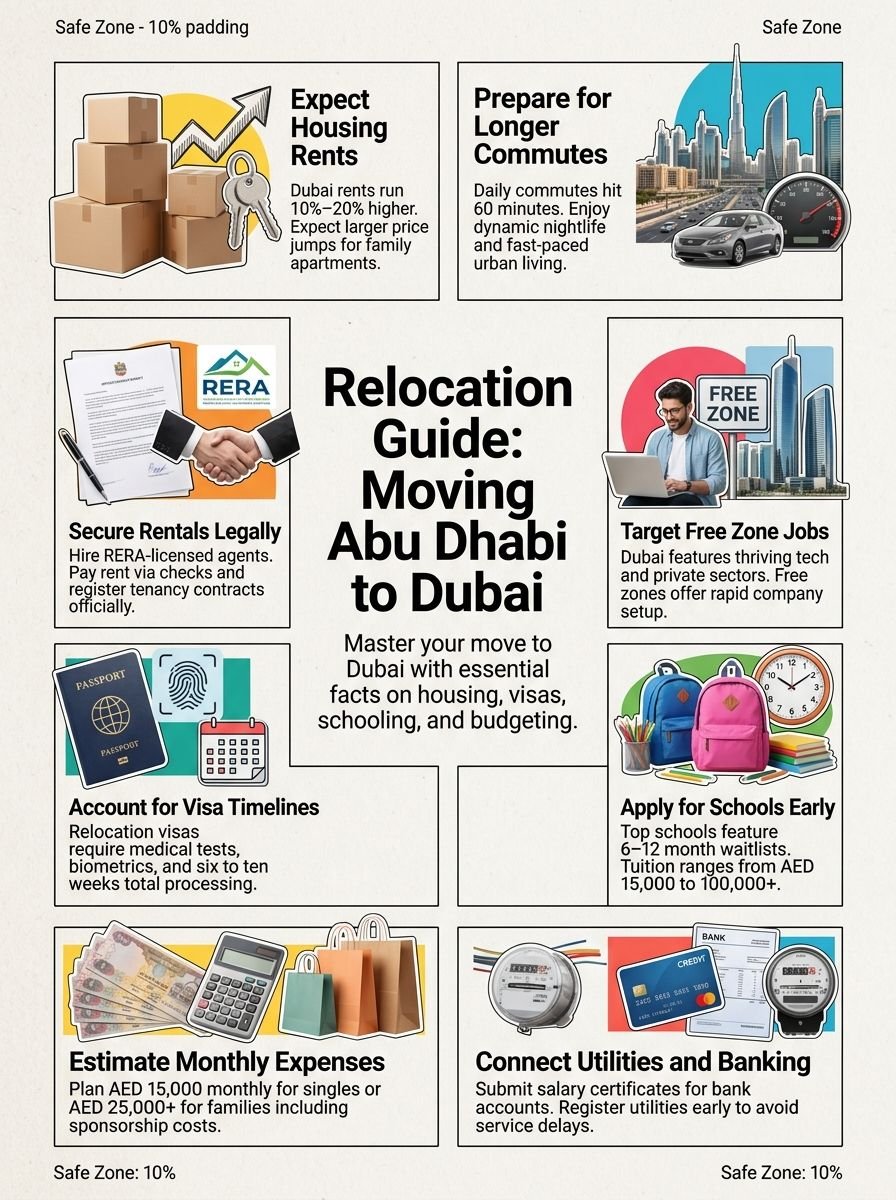
- Dubai is busier and more expensive than Abu Dhabi. Apartment rents are 10–20% higher, starting at AED 55,000 for a one-bedroom. Many families live in outer areas like Al Nahda or Mirdif to save money.
- The job market in Dubai offers more private sector and tech jobs than Abu Dhabi’s government-heavy options. Getting hired needs employer sponsorship, a work visa from MOHRE, health checks, and Emirates ID—this process can take six to ten weeks.
- Schooling choices in Dubai include British (GCSE/A-Level), American (AP/SAT), and IB programs. Fees range from AED 15,000 up to over AED 100,000 per year. Top schools may have waiting lists of six months or more.
- For moving costs as a single person, you need at least AED 15,000 monthly; families often spend between AED 25,000–50,000 per month if school fees and bigger homes are included. Budget extra for car insurance (AED 2,000–5,000), health insurance (from AED 600 yearly), utilities (up to AED 1,200/month), and groceries.
- Always use RERA-approved agents when renting or buying property in Dubai. Visit each place yourself before paying any deposit. Read rental contracts carefully—extra “chiller” cooling fees or agency charges apply in many buildings.
Key Differences Between Abu Dhabi and Dubai

I noticed some things felt different when I moved from Abu Dhabi to Dubai, even though both cities are in the UAE. These changes made my move interesting, and they shaped how I settled into daily life here.
Lifestyle and Culture
Abu Dhabi gives me a calm, family-friendly lifestyle. Life feels slower here, centered around parks, cultural spots, and open spaces. My daily routine stays easy with commute times between 15 to 30 minutes.
The city ranks as one of the world’s safest places; public areas stay well-lit at night so women and families feel welcome any hour. Abu Dhabi offers more parks, bigger homes for families like mine, and famous places such as the Corniche waterfront or Yas Island.
Dubai moves much faster day-to-day and feels busier with crowds almost everywhere I go. Nightlife pulses strong in Dubai; bars and clubs fill up every weekend while Abu Dhabi keeps things quieter after sunset with museums or art shows instead.
Commute time in Dubai jumps up to 60 minutes on some days due to traffic jams across major roads. Both cities offer good quality of life but give it in different ways: space and peace in Abu Dhabi or energy and choice in Dubai nightlife scenes.
Cost of living changes quite a bit depending on which options I pick next for my move into Dubai housing markets.
Cost of Living
Living costs shift quite a bit when moving from the capital to Dubai. I noticed right away that housing prices jump, even if day-to-day expenses like food, utilities, and transport look about the same. Here’s a clear breakdown of what to expect, based on my own research and experience:
| Category | Abu Dhabi Costs (AED per Year/Month) | Dubai Differences & Notes |
|---|---|---|
| Studio Apartment Rent | 35,000 – 55,000 | 10%-20% higher in Dubai, more choices in city center |
| 1-Bedroom Apartment Rent | 50,000 – 75,000 | Expect 55,000 – 90,000 in Dubai, city living costs more |
| 2-Bedroom Apartment Rent | 70,000 – 110,000 | Range climbs to 90,000 – 130,000 in Dubai |
| 3-Bedroom Apartment Rent | 90,000 – 140,000 | Premium areas in Dubai can reach 180,000 or more |
| 3-Bedroom Villa Rent | 120,000 – 180,000 | Some villas in Dubai cross 220,000, families often look at outer districts |
| Electricity and Water (1-2 BR) | 400 – 700 per month | Similar in Dubai, heavy AC use bumps up summer bills |
| Budget Neighborhoods | Khalifa City, Mussafah: Save 30%-40% vs downtown | Dubai has Al Nahda, Discovery Gardens, International City for savings |
| Food, Utilities, Transport | Standard | Prices almost match between both cities |
I found that while smaller units cost less, the price jump for bigger homes hits hard. My friends who moved with families spent time searching for quieter, less pricey suburbs. With rising rent, it helps to weigh options outside the fancy heart of Dubai. Now, let me share some tips about finding a place to live in this city.
Finding Accommodation in Dubai
I found moving to Dubai much easier once I knew where to search for a new home. The city offers many choices, so I took time to pick what fits my needs and budget.
Popular Neighborhoods for Expats
I visited many neighborhoods in Dubai when searching for my next home. Each area felt different, with its own energy, style, and crowd.
- Dubai Marina sits along the waterfront. I saw tall apartment buildings here, lots of cafes, shops, and fun nightlife. Many expats choose this spot for an active lifestyle close to work centers.
- Downtown Dubai stands out with the Burj Khalifa towering above all. There are luxury apartments here that suit professionals who want a fast city pace. Shopping malls and restaurants fill up on weekends.
- Jumeirah Lakes Towers (JLT) feels relaxed but still busy. I noticed more affordable rent options compared to the Marina or Downtown. Families often live here for its parks and schools nearby.
- Arabian Ranches caught my eye with quiet streets lined by villas. It offers big houses with gardens that appeal to families seeking comfort and space.
- Palm Jumeirah looks special with its unique island shape. Villas and apartments come at a high cost, but the sea views make it worth it for those who love luxury living.
- Jumeirah Village Circle (JVC) is popular among people wanting new housing at lower costs than central areas. My friends say there are many fresh apartments there, plus easy access to highways.
- Al Barsha is close to Mall of the Emirates and many offices. Rents felt better suited to my budget while offering good school choices.
- Mirdif provides a cozy feel outside the main city rush. Villa rentals tend to be cheaper; it suits large families or anyone who wants peace yet quick travel back into town.
During my search for accommodation in Dubai, I paid attention to property costs, location benefits, and housing types such as apartments or villas in each neighborhood before making any decision about where I wanted to settle down as an expatriate resident in this energetic city.
Tips for Renting or Buying Property
After looking at popular neighborhoods for expats, I wanted to share what worked for me while finding accommodation in Dubai. Renting or buying property here felt simple with the right steps and a bit of knowledge about the housing market.
- Always use RERA-licensed real estate agents, they specialize in expatriate moves and know the local rules. I checked their license number on the Department of Economic Development (DED) website before moving forward.
- Never pay any cash deposits without getting an official receipt. This protected my money and gave me peace of mind during each visit.
- I visited each property in person before agreeing to anything. This helped me check real conditions and avoid surprises.
- Upfront costs can be high; for my home, I paid a year’s rent using two checks, a 5% deposit, and an agency fee that was also 5% of my annual rent.
- A complete inspection saved me trouble later on. I looked closely at air conditioning units, plumbing, kitchen appliances, and how well the building was kept up by property management.
- Some buildings charge separately for district cooling systems called chiller fees; understanding these costs helped me budget better.
- Leasing through proper channels meant my tenancy contract (Tawtheeq) was registered for family sponsorship needs.
- Reading every part of the rent agreement let me know about any hidden charges or restrictions before signing anything.
Using these tips made my move to Dubai smoother, safer, and easier to manage financially as a new resident looking at leasing or buying property in this busy city.
Navigating the Job Market in Dubai
I want to find work that matches my skills, and Dubai has lots of options. Getting the right papers is key, so I make sure to check rules before starting a job.
Employment Opportunities
Dubai has a wide job market, much bigger than Abu Dhabi. I see jobs in tech, hospitality, finance, and more private companies. Abu Dhabi mostly focuses on government roles, oil and gas, healthcare, and banking.
Dubai’s fast city life fits people who want to work in startups or the private sector.
Free zones like Hub71 offer coworking spaces for new businesses. These places give 100% foreign ownership and no corporate tax. Setting up a company in a free zone like ADGM (for finance), KIZAD (for manufacturing/logistics), Masdar City (for clean energy/tech), or Twofour54 (media/entertainment) takes only one to two weeks.
Many expats start their careers here because of these benefits and growth chances in economic sectors such as tech or media.
Visa and Work Permit Requirements
Moving for a new job in Dubai means I need to meet some legal steps. After finding employment, I have to get the right visa and work permit before starting work.
- Employer sponsorship is required for most people working in Dubai. My new employer starts this process, giving me an offer letter.
- Work permit approval must come from the Ministry of Human Resources and Emiratisation, known as MOHRE.
- Entry permits stay valid for up to 60 days; this allows me to legally arrive and stay while my visa processes.
- Work permit processing usually takes two to three weeks after applying through my company.
- A medical fitness test at an approved UAE health center proves I am healthy enough to live and work here.
- Emirates ID biometrics appointment is needed after landing so the government can record my fingerprints and photo.
- The next step is getting my residence visa stamped into my passport at the Immigration Department; this makes everything official.
- An attested university degree or qualification is often required by employers when applying for an employment visa; attestation must be done before moving if possible.
- The whole process can take six to ten weeks from time of job offer until settling in the city, depending on how quickly all papers and approvals are handled.
- Following labor laws and keeping documents ready helps prevent delays with regulatory compliance during relocation.
I always make sure every form is filled correctly and keep extra copies of my documents handy throughout these steps.
Education and Schools in Dubai
I checked out many schools in Dubai, and I found a lot of choices for expats. Families can find options that fit many needs, so it helps to look early.
International School Options
Moving to Dubai means picking the right school for my child is very important. I want a place where my child learns well and feels happy.
- Many schools in Dubai offer the British curriculum, which follows the UK National Curriculum, GCSE, and A-Levels. This gives my child a strong foundation in many subjects.
- Some families choose the American curriculum, which includes US-based education, Advanced Placement or AP courses, and SAT preparation. Schools like the American Community School (ACS) and GEMS American Academy are good choices.
- I can also look at International Baccalaureate (IB) schools in Dubai. These include Primary Years Program (PYP), Middle Years Program (MYP), and Diploma Program (DP). GEMS World Academy and Nord Anglia International School both follow IB programs.
- For a British approach with strong accreditation, Cranleigh Abu Dhabi, Brighton College, and Repton School are well-known names. My move from Abu Dhabi shows me that Repton School is on Al Reem Island but has a branch in Dubai too.
- Yasmina School stands out with an ADEK Outstanding rating; though it’s on Yas Island in Abu Dhabi, I see parents moving between cities for top education choices.
- Accreditation matters to me when choosing international schools; most reputable options have accreditations from UK or US bodies or international agencies recognized worldwide.
- Each school offers different programs that match certain qualifications or assessments. For example, IB schools focus on global learning while British schools prepare students for GCSEs and A-level exams.
- My decision depends on what learning style suits my child best—British pedagogy is more structured while American or IB might feel more flexible.
My top priority is making sure my child’s school matches our needs in both curriculum quality and daily life fit.
Key Considerations for Families
Choosing a school in Dubai takes some planning, especially if your children are entering Years 1 to 3. Popular international schools often have waiting lists that last six to twelve months.
Tuition fees can surprise many families. Budget schools charge around AED 15,000 to 30,000 per year, while mid-tier options range from AED 30,000 to 60,000 annually. I saw premium institutions go beyond AED 100,000 every year.
Uniforms usually cost between AED 500 and AED 1,500 each year. Books and other supplies add another AED 1,000 to AED 2,000.
School bus rides can take more than forty-five minutes depending on the area you choose for your home or office building. Extracurricular activities cost me about AED 2,000 to AED 5,000 yearly at most places I checked out.
The Abu Dhabi Department of Education and Knowledge sets rules so all international schools keep their quality high no matter where they are located in Dubai or nearby areas. Getting everything ready early helps avoid stress later during enrollment season for new students like mine.
Essential Relocation Tips
I keep my move smooth by planning each step ahead. I also make sure to organize all the important details before settling in.
Budgeting for Your Move
Moving from Abu Dhabi to Dubai took careful planning for me. I needed to track all my expenses, count in hidden costs, and make sure my budget was enough. Here’s how I handled budgeting for my move:
- Calculated a base monthly salary need of AED 15,000 since I planned to live modestly as a single person.
- Estimated a comfortable budget of AED 25,000 to 30,000 per month when moving with family, especially if my employer provided a housing allowance.
- Prepared for higher spending, up to AED 40,000–50,000 or more per month when seeking private villas and premium schooling for my kids.
- Planned for three to four months’ worth of expenses because the full relocation process included job start dates, finding housing, and settling my family.
- Allocated between AED 3,000 to 5,000 per person for family sponsorship processes; this covered medical exams, Emirates ID fees, and visa charges.
- Checked that either I earned AED 5,000 monthly or had at least AED 4,000 plus accommodation arranged before applying for spouse and child sponsorships.
- Set aside money for groceries based on our eating habits; spent between AED 1,500–2,000 monthly with basic shopping for four people but up to AED 6,000 with a premium grocery lifestyle.
- Added petrol costs since driving is common; paid about AED 2.50–3.00 per liter which made our fuel bills run from AED 400 up to AED 800 each month.
- Purchased health insurance plans starting from AED 600 up to AED 1,200 per person yearly; picked an improved plan at around AED 3,000 each after comparing hospitals and coverage options myself.
- Compared used sedan prices from AED 25,000–50,000 when buying second-hand or prepared to spend over AED 70,000 for a new one; considered SUV leases costing about AED 1,500–2,500 every month as another option that suited my needs at the time.
- Paid close attention to car insurance premiums ranging from around AED 2,000 up to as much as AED 5,000 annually; added another typical registration renewal fee between AED 500 and 1,000 every year as advised by friends who moved before me.
- Spent on cinema tickets between about AED 35 and 50 during weekends out with the kids or treated myself at mid-range restaurants where meals cost about AED 80–150 each while cheap meal deals went down closer to AED 25–40 per person; saved fine dining for special occasions since these easily reached between AED 250 and 500 per guest before drinks or tips even got added in.
- Accounted for mobile phone plans that ranged from about AED 150–300 every month per line depending on data needs which seemed pretty standard once settled into Dubai life.
Each step helped me make sure my relocation was smooth without any nasty financial surprises along the way.
Setting Up Utilities and Banking
Getting utilities and setting up banking in Dubai felt strange at first, but it got easier with the right steps. I dealt with electricity, water, internet, and banking myself soon after arriving.
- I started utility services for water and electricity by contacting either Abu Dhabi Distribution Company (ADDC) or Al Ain Distribution Company (AADC), since they serve most areas.
- Costs for my three-bedroom villa reached AED 800 to 1,200 each month; bills rose in summer when using air conditioning.
- For high-speed internet and TV, I chose between Etisalat and du; monthly charges ranged from AED 300 to 500 for internet alone while TV packages like OSN cost an extra AED 100 to 300 per month.
- My local bank account proved essential for salary deposits, rent payments, day-to-day expenses, and making easy online transactions.
- Banks needed my passport copy, Emirates ID or application receipt, residence visa stamp, plus a salary certificate before opening my account.
- Big names like Emirates NBD, ADCB, FAB, Mashreq Bank, and HSBC UAE offered strong customer service at branches across the city.
- Banks provided me with a debit card upon account opening; some gave checkbooks too which landlords usually required for rent payments.
- Premium bank accounts asked for minimum salaries of AED 5,000 to 10,000 monthly; basic accounts worked fine if my income was lower.
- Their online banking apps helped me pay bills quickly—including utilities—and track spending on the go.
With these basics organized for daily living in Dubai, finding your ideal school comes next if you have children or family joining you soon.
Conclusion
Moving from Abu Dhabi to Dubai is a big step, but I found it rewarding. Each city has its own charm and way of life. Planning ahead made my move smoother and easier. When I settled in Dubai, I quickly felt at home because I was prepared for the changes.
With the right plan, you can enjoy your new start too.
FAQs
1. What should I know before moving from Abu Dhabi to Dubai?
Before you move, learn about the cost of living in Dubai. Rent, food, and travel can be higher than in Abu Dhabi. Check your job options and school choices if you have kids. Make a list of what you need for your new home.
2. How do I find a place to live in Dubai?
Start by looking at different areas online; some places are busy while others are quiet. Think about how close you want to be to work or schools. Visit homes if you can before signing any papers.
3. What documents do I need for relocation from Abu Dhabi to Dubai?
Keep your Emirates ID ready along with your passport and visa copy; these help when opening bank accounts or getting new services like water and electricity set up at home.
4. Is it easy to move my things between Abu Dhabi and Dubai?
Yes, many moving companies offer quick service between the two cities; pack early so movers can load boxes fast on moving day then check everything once it arrives at your new place for peace of mind.
Leave a Reply